Tangle Free Cargo Straps: Why Knots and Snarls Waste Time on the Road
Why Tangle Free Cargo Straps Matter for Anyone Who Secures Loads
If you have ever stood beside a truck bed or a trailer, wrestling with a ratchet strap that has turned itself into a knotted mess, you already understand the frustration. A strap that tangles costs time, patience, and sometimes even safety. The problem is common across industries: outdoor crews, marine workers, and transport drivers all deal with the same snarled webbing. That is why tangle free cargo straps have become more than a convenience. They are a practical upgrade for anyone who secures loads regularly.
Traditional ratchet straps are simple tools. But their design often encourages tangling. The loose end flops around during storage, the hook catches on other webbing, and before you know it you have a bird’s nest of polyester. Untangling takes minutes, sometimes longer, and in a busy workday those minutes add up. Worse, forcing a tangled strap can damage the webbing or the ratchet mechanism, leading to reduced holding strength. This is where a thoughtful redesign makes a real difference.
What Causes Tangling in Ordinary Straps
To understand why tangle free cargo straps work, it helps to look at what causes tangling in the first place. Most standard ratchet straps have a loose tail that hangs free when the strap is not under tension. That tail can wrap around the main body, get caught in the ratchet housing, or snag on other equipment in the truck bed. The hooks, often open J-hooks, can lock onto each other or onto the webbing, creating a knot that is hard to undo.
Another factor is the way straps are stored. Tossing them into a toolbox or a bin after use practically guarantees tangles. Even winding them by hand takes care, and many workers do not have the time to do it perfectly. The result is a pile of straps that require sorting before every use. Over the course of a week, a driver might lose an hour just to untangling. Multiply that by a fleet, and the cost becomes significant.
How Tangle Free Cargo Straps Solve the Problem
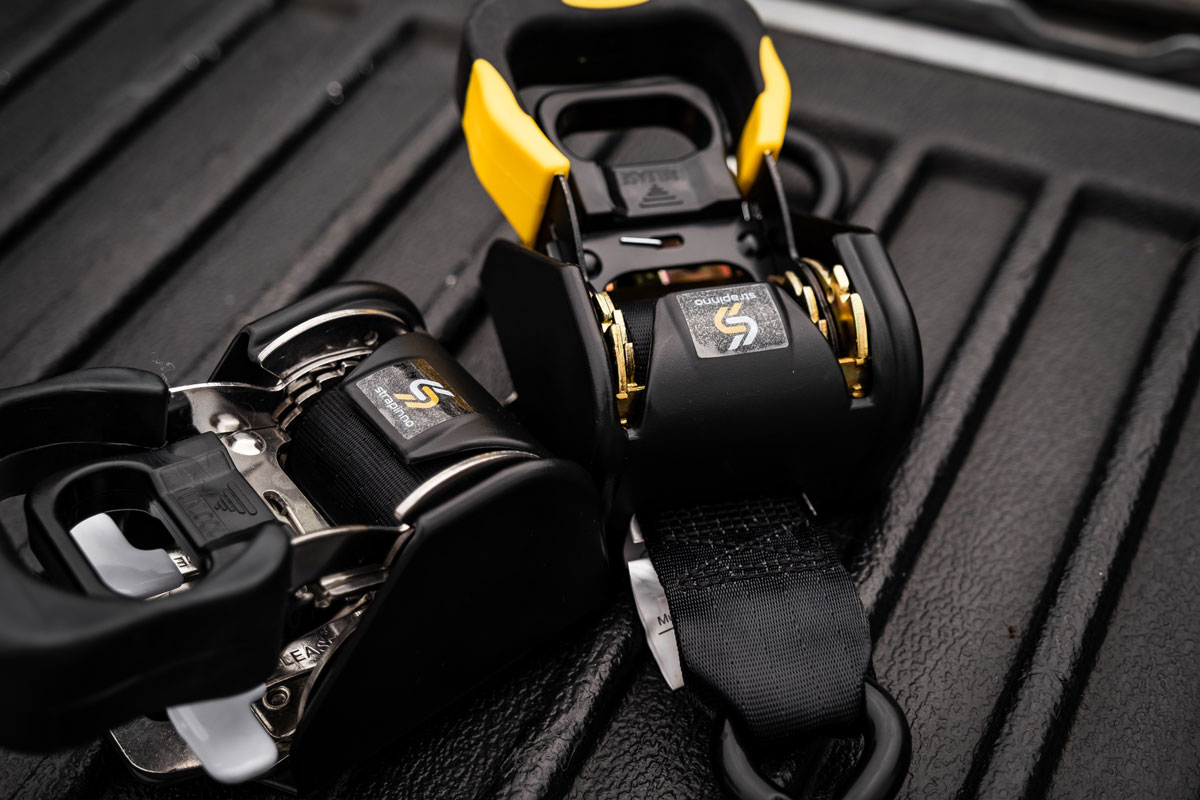
Tangle free cargo straps address the root causes directly. Instead of a loose tail, they incorporate a retraction mechanism or a captive spool that keeps the excess webbing under control. The hooks are often designed to stay in place, with no free-swinging ends to catch on other straps. Some designs use a flat hook profile that lies flush against the webbing, so there is nothing to snag.
The engineering behind these straps is not complicated, but it is deliberate. The goal is to let the strap behave predictably every time you pick it up. You should be able to grab it, pull it across your load, and ratchet it tight without pausing to untangle. That reliability is the core benefit. When you are working in rain, cold, or low light, the last thing you want is a strap that fights you.

The Strapinno tangle free cargo straps are a good example of this approach. They use a patented mechanism that keeps the webbing organized during storage and deployment. The strap retracts automatically, so there is no loose tail to tangle. The hook design avoids the usual snag points. For someone who ties down loads daily, this kind of thoughtful engineering makes a noticeable difference in workflow.
Practical Benefits on the Job
Time savings are the most obvious advantage. If each strap used to take a minute to untangle, and you use six straps per load, that is six minutes saved every time you secure a load. Over a day with multiple stops, the savings grow. But there are other benefits too.
Less tangling also means less wear. When straps are forced apart or yanked free from knots, the webbing can fray. The ratchet mechanism can be stressed. With tangle free cargo straps, the webbing stays clean and the ratchet works smoothly because it never has to deal with a jammed tangle. That extends the life of the strap, which matters for anyone who invests in quality gear.
Safety improves as well. A tangled strap that is partially damaged might not hold as well. If you cannot see the full length of the webbing because it is knotted, you might not notice a cut or a worn spot. Tangle free straps make inspection easier because the webbing is always organized. You can run your hand along it and see its full condition before each use.
For marine applications, where straps are exposed to salt and moisture, keeping them tangle free also helps them dry faster. A strap that is neatly stored can air out, while a tangled pile stays damp and can grow mildew. The same logic applies to outdoor recreation, where gear gets packed quickly and stored in tight spaces.
What to Look for When Choosing Tangle Free Cargo Straps
Not all tangle free cargo straps are created equal. Some use a simple elastic loop to hold the tail, which works but can stretch out over time. Others use a spring-loaded retractor that pulls the webbing back into a housing. The quality of the retractor matters. A weak spring will not pull the strap in fully, and a strong one can be hard to pull out. The sweet spot is a mechanism that retracts reliably without adding too much resistance when you are pulling the strap across a load.
The hook design is another key factor. Look for hooks that lie flat and do not rotate freely. A hook that swivels can catch on the webbing or on other hooks. Some designs use a locking hook that stays in place until you release it. That adds a step to deployment, but it also prevents tangles. For most users, a fixed-position hook with a smooth profile is the best balance.

Webbing width and breaking strength are the same as with conventional straps. Tangle free cargo straps come in the same sizes, typically 1 inch, 2 inch, or 4 inch widths, with corresponding load ratings. The tangle-free feature does not change the fundamental strength of the strap. It only changes how the strap behaves when not under load.
One thing to watch for is the storage case or housing. Some tangle free designs enclose the webbing in a plastic or metal case. That protects the webbing from dirt and UV, but it also adds bulk. For tight storage spaces, a compact design is better. Other designs use a sleeve that the webbing slides into, which is lighter but offers less protection. Consider where you will store the straps and how much space you have.
Who Benefits Most from Tangle Free Cargo Straps
Anyone who secures loads frequently will appreciate the upgrade. But some users see especially clear gains.
- Long-haul truck drivers who tie down multiple loads each day save significant time and frustration.
- Marine workers who deal with wet, salty conditions benefit from organized storage that helps straps dry and stay clean.
- Outdoor enthusiasts, such as kayakers or campers, appreciate quick deployment when they are packing up in a hurry.
- Fleet managers who outfit many vehicles see reduced downtime and longer strap life across the whole fleet.
For occasional users, the benefit is less about time and more about ease of use. If you only secure a load a few times a year, you might not mind untangling a strap. But even occasional users find that a tangle free strap is simply more pleasant to work with. It removes a small annoyance that can sour the whole task.
Are There Any Downsides
No tool is perfect for every situation. Tangle free cargo straps tend to cost more than basic ratchet straps. The added mechanism, whether a retractor or a spool, adds manufacturing cost. For a user who has ten straps and replaces them rarely, the extra upfront cost may be worth it. For someone who loses or damages straps often, a cheaper conventional strap might be more practical.
Another consideration is repairability. A standard ratchet strap is simple. If the ratchet fails, you can often replace it. With a tangle free design, the mechanism is integrated. If it breaks, you might need to replace the whole strap. Look for brands that offer a warranty or replacement parts. The Strapinno tangle free cargo straps are built with durability in mind, but no mechanism is immune to wear.
Also note that tangle free straps are not necessarily faster to deploy than a well-maintained conventional strap that is stored neatly. If you are the type of person who always winds your straps properly and stores them in a bag, you might not see a huge time difference. The real gain comes for those who work quickly, in variable conditions, and cannot afford to baby their gear.
Final Thoughts on Making the Switch
Moving to tangle free cargo straps is a small change that pays off in everyday use. The time saved, the reduced wear on equipment, and the lower frustration all add up. If you are already using ratchet straps regularly, it is worth trying one or two tangle free models to see how they fit your workflow. The difference is most noticeable when you are in a hurry or working in less-than-ideal conditions.
The Strapinno tangle free cargo straps represent a thoughtful solution to a common problem. They do not reinvent the ratchet strap; they refine it. By focusing on the specific pain point of tangling, they make a familiar tool work better. That kind of incremental improvement is often more valuable than a flashy new invention. For anyone who spends time on the road or on the water, a strap that stays organized is a strap that works for you, not against you.
 Facebook
 Instagram
 YouTube